Allen JA 1904. Mammals from southern Mexico and Central and South America. Bulletin American Museum of Natural History 20(4): 29-80.
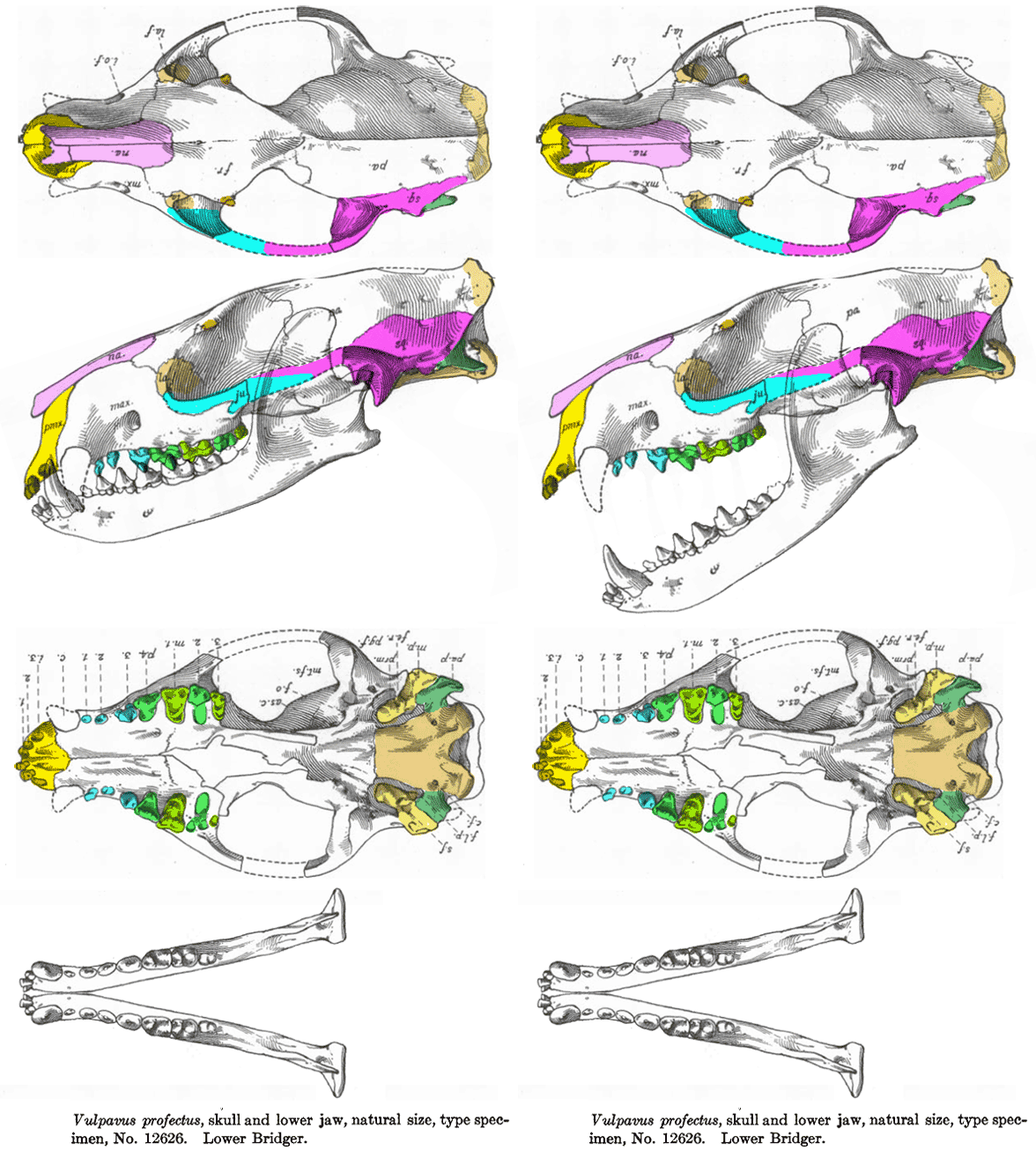
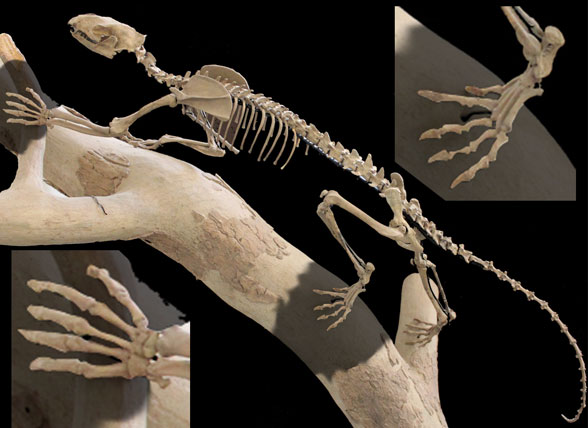
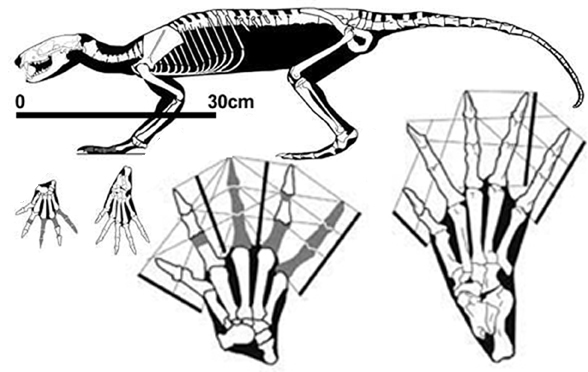
Heinrich RE and Rose KD 1997. Postcranial morphology and locomotor behavior of two early Eocene miacoid carnivorans, Vulpavus and Didymictis. Palaeontology 40:279-305.
Mac Intyre GT
1962. Simpsonictis, a new genus of viverravine
miacid (Mammalia, Carnivora).
American Museum Novitates 2118:
1-4.
Marsh 0C 1871. Notice of some new fossil mammals and birds from the Tertiary formations of the West. American Journal of Science, Series 3, 2: 120-127.
Mac Intyre GT 1966. The Miacidae (Mammalia, Carnivora) Part 1. The systematics of Ictidopappus and Protictis. Bulletin of the American Museum of Natural History 131(2):115-210.
Matthew WD 1937. Paleocene faunas of the San Juan basin,
New Mexico. Transactions of the American Philosophical Society,
new series 30: 1-510.
Orliac MJ, Argot C and Gilissen E 2012. Digital Cranial Endocast of Hyopsodus (Mammalia, “Condylarthra”): A Case of Paleogene Terrestrial Echolocation? PlosOne v.7(2); 2012PMC3277592
Rose KD and von Koenigswald W 2005. An exceptionally complete skeleton of Palaeosinopa (Mammalia, Cimolesta, Pantolestidae) from the Green River formation, and other postcranial elements of the Pantolestidae from the Eocene of Wyoming (USA).
Palaeontographica, Abteilung A: Palaozoologie – Stratigraphie 55–96 E. Schweizerbart'sche Verlagsbuchhandlung 10.1127/pala/273/2005/55
Simpson GG 1935. New Paleocene mammals from the Fort
Union of Montana. Proceedings of the U. S. National
Musem 83: 221-244.
wiki/Vulpavus
|