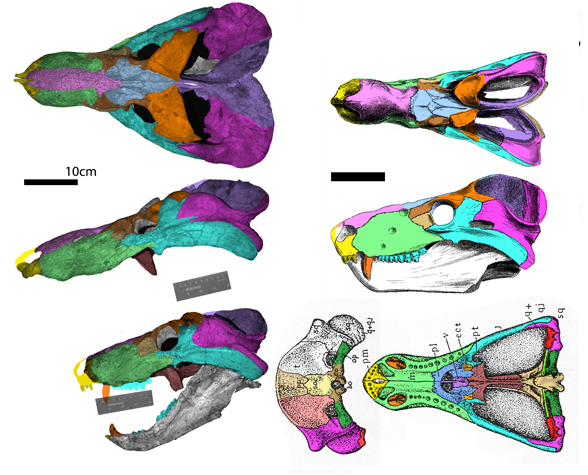
Barberena MC, Bonaparte JF and Teixeira AMSA 1987. Thrinaxodon brasiliensis sp. nov., a primeira ocorrencia de cinodontes gales - sauros para o Triasico do Rio Grande do Sul. Anais do X Congresso Brasileiro de Paleontologia, Rio de Janeiro, Brazil, pp. 67-76.
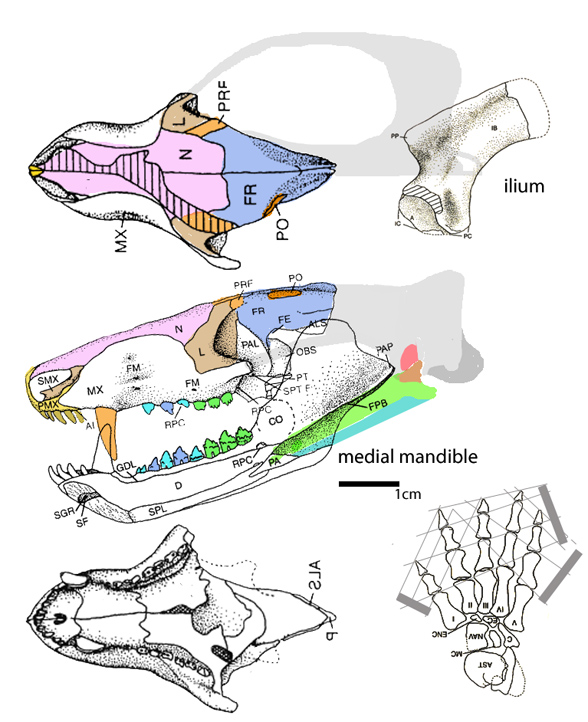
Bonaparte JF and Barbierena MC 2001. On two advanced carnivorous cynodonts from the Late Triassic of Southern Brazil. Bulletin of the Museum of Comparative Zoology 156(1):59–80.
Bonaparte JF, Martinelli AG, Schultz CL and Rubert R 2003. The sister group of mammals: small cynodonts from the Late Triassic of Southern Brazil. Revista Brasileira de Paleontologia 5:5-27.
Bonaparte JF and Crompton AW 2017. Origin and relationships of the Ictidosauria to non-mammalian cynodonts and mammals. Historical Biology. https://doi.
Brink AS 1955. Note on a very tiny specimen of Thrinaxodon liorhinus. Palaeontol. Africana, vol. 3, pp. 73-76.
Broili F and Schröder J 1934. Beobachtungen an Wirbeltieren der Karrooformation. II. Über den Cynodontier Tribolodon frerensis Seeley. Sitzungsberichte der Bayerischen Akademie der Wissenschaften, Sonderdruck aus dem Jahrgang 1934 163–177.
Estes R 196. Cranial anatomy of the Cynodont Reptile, Thrinaxodon liorhinus. Bulletin, Museum of Comparative Zoology, Harvard University, 1961,125: 165-180. online paper
Damiani R, Modesto S, Yates A and Neveling J August 2003. Earliest evidence of cynodont burrowing. Proc. Biol. Sci. 270 (1525): 1747–51. doi:10.1098/rspb.2003.2427. PMID 12965004.
Hillenius WJ 1994. Turbinates in therapsids: evidence for Late Permian origins of mammalian endothermy. Evolution 48: 207-229.
Jenkins FA Jr 1967. The postcranial skeleton of African cynodonts. Peabody Museum of Natural History Yale University Bulletin 36.
Kühne and Krusat 1972. Legalisierung des taxon Haldanodon (Mammalia, Docodonta). Neues Jahrbuch für Geologie, Paläontologie and Mineralogie, Monatshefte 5: 300-302.
Olson EC 1944. Origin of mammals based upon cranial morphology of the therapsid suborders. Special Papers of the Geological Society of America 55: 136 pp.
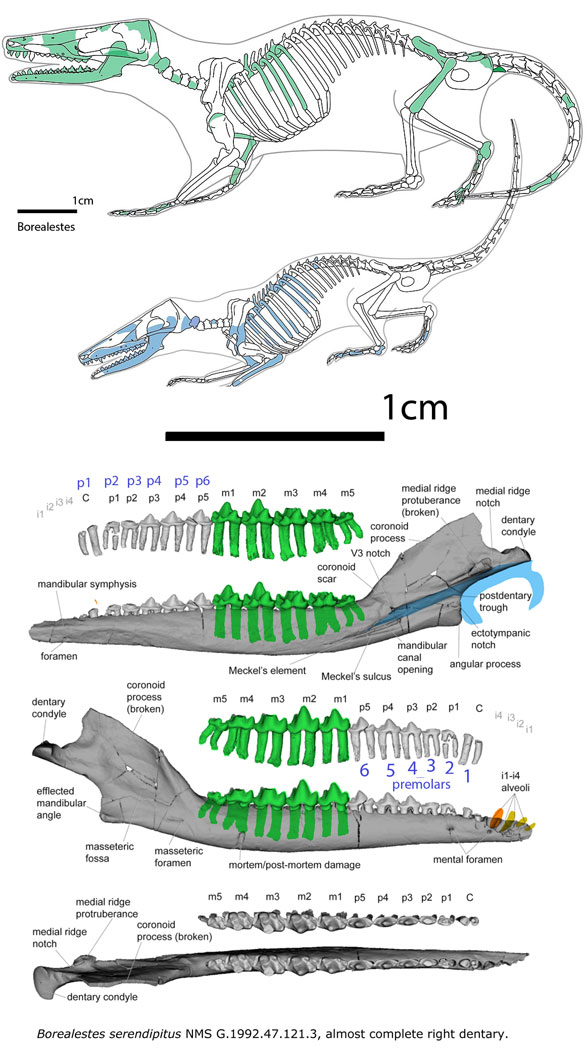
Pancirolli E, Benson R and Luo Z-X 2016. The mandible and dentition of Borealestes serendipitus (Docodonta) from the Middle Jurassic of Skye, Scotland. Journal of Vertebrate Paleontology 39(3):Article: e1621884
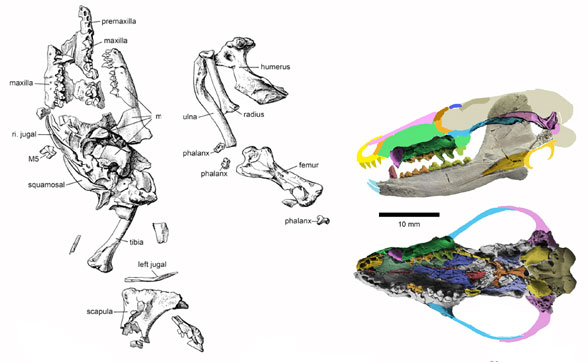
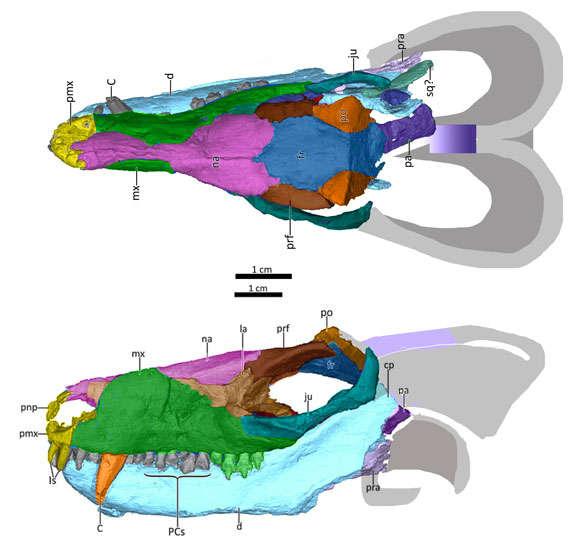
Pusch LC, Kammerer CF and Fröbisch J 2021. Cranial anatomy of Bolotridon frerensis, an enigmatic cynodont from the Middle Triassic of South Africa, and its phylogenetic significance. PeerJ 9:e11542 DOI 10.7717/peerj.11542
Seeley HG 1894. Researches on the structure, organisation, and classification of the fossil reptilia.-Part IX, Section 1. On the Therosuchia: Philosophical Transactions of the Royal Society of London, series B, v. 185, p. 987-1018.
Seeley HG 1895. Researches on the Structure, Organization, and Classification of the Fossil Reptilia. Part IX, Section 5. On the Skeleton in New Cynodontia from the Karroo Rocks. Philosophical Transactions of the Royal Society of London B 186: 59-148.
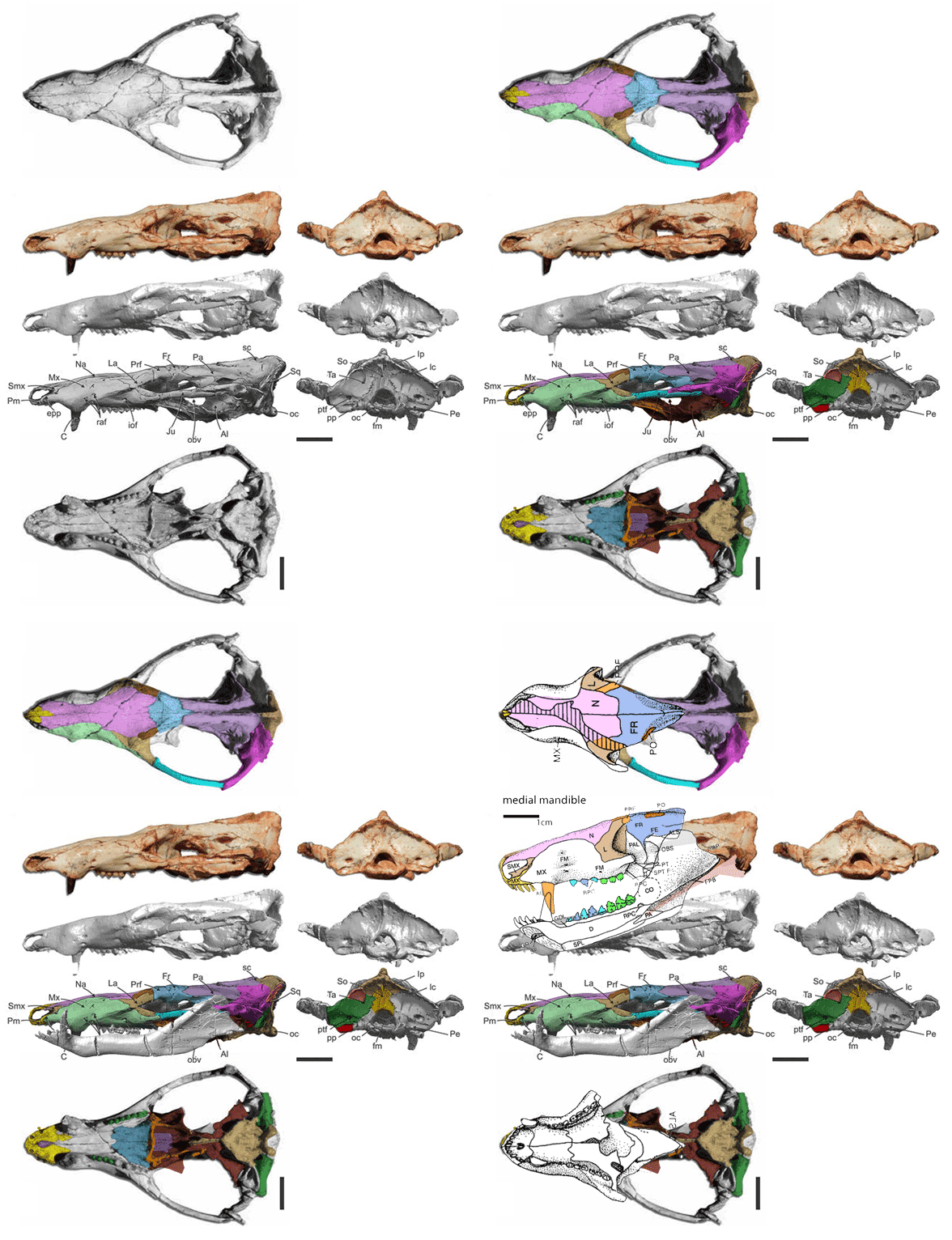
Stefanello M et al (4 co-authors) 2023. A complete skull of a stem mammal from the Late Triassic of Brazil illuminates the early evolution of prozostrodontian cynodonts. Journal of Mammalian Evolution. DOI: 10.1007/s10914-022-09648-y
Waldman M and Savage RJG 1972. The first Jurassic mammal from Scotland". Journal of the Geological Society. 128 (2): 119–125.
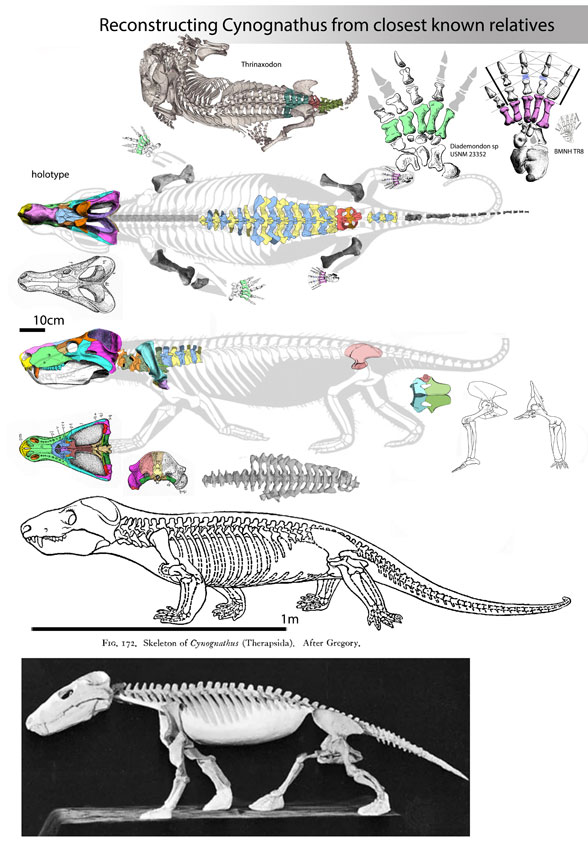
Wynd BM, Peecock BR, Whitney MR and Sidor CA 2018. The first occurrence of Cynognathus crateronotus (Cynodontia: Cynognathia) in Tanzania and Zambia, with implications for the age and biostratigraphic correlation of Triassic strata in southern Pangea. pp. 228–239 in: C.A. Sidor and S.J. Nesbitt (eds.), Vertebrate and Climatic Evolution in the Triassic Rift Basins of Tanzania and Zambia. Society of Vertebrate Paleontology Memoir 17. Journal of Vertebrate Paleontology 37(6, Supplement)
wiki/Thrinaxodon
digimorph.org//Thrinaxodon
wiki/Prozostrodon
wiki/Bolotridon
wiki/Cynognathus
wiki/Borealestes
wiki/Haldanodon |