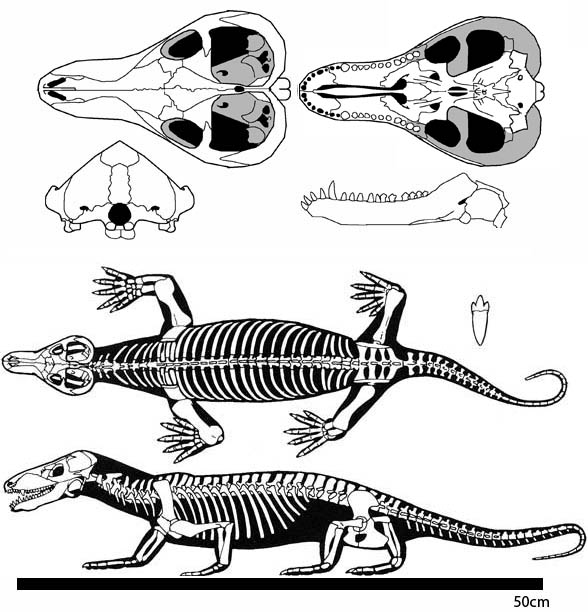
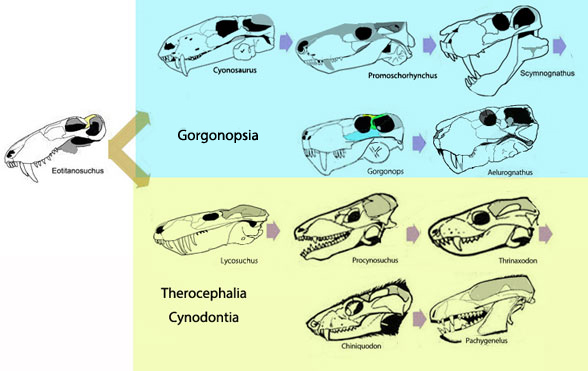
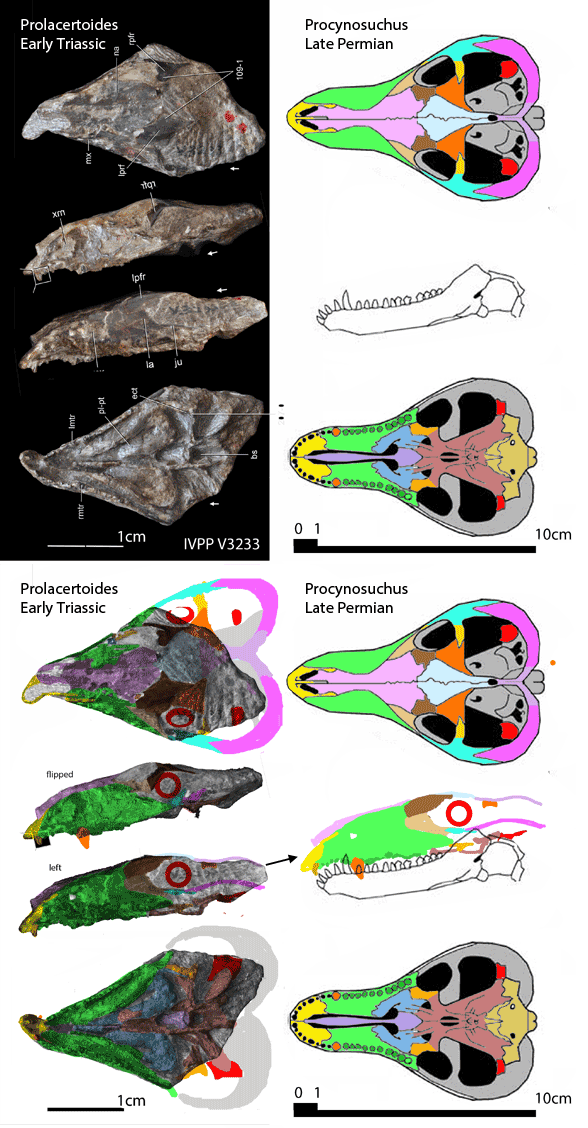
Procynosuchus delaharpeae (Broom 1937, Kemp 1979, 1980, RC5) total length: 60 cm. 250 mya Latest Permian represents a subset of the therapsids, a primitive cynodont derived from gorgonopsians, like Aelurognathus and preceding more advanced cynodonts, like Thrinaxodon.
Procynosuchus had widely flaring cheekbones and lateral temporal fenestrae that expanded medially to meet each other at the midline of the skull roof. Multi-cusped teeth, the predecessors of molars, first appeared here. They did not occlude, but sheared past each other. The secondary palate first appeared here but it was incomplete. The occipital condyle, the ball of the skull that fit into the socket at the first neck bone, began dividing in two here. This prevents the skull from moving to the left and right and shifts this duty to the neck bones.
The lumbar ribs were short and straight and the articulations were tight, indicating less undulation in this area. This may signal the origin of the mammalian diaphragm, a muscular wall separating the lungs and heart from the digestive organs. Four sacrals were present for greater support at the hips. Between the pubis and ischium a hole developed, the thyroid fenestra.
Juveniles are known. They resembled pre-mammals, such as Pachygenelus, in lacking a postorbital bar and having a proportionately larger braincase.
Procynosuchus chewed its food, speeding up the process of digestion and the release of the food's energy. The secondary palate enabled breathing to continue while chewing. It also strengthened the skull and provided a platform against which the tongue could move food around. |