Bown TM and Simos EL 1987. New Oligocene Ptolemaiidae (Mammalia:?Pantolesta) from the Jebel Qatrani Formation, Fayum Depression, Egypt. Journal of Vertebrate
Paleontology 7:311–324.
Burnett GT 1830. Illustrations of the Qwuadrupeda, or Quadrupeds, being the arrangement of the true four-footed Beasts indicated in outline. Quarterly Journal of Science, Literature and Art, July to December, 1829, 336–353.
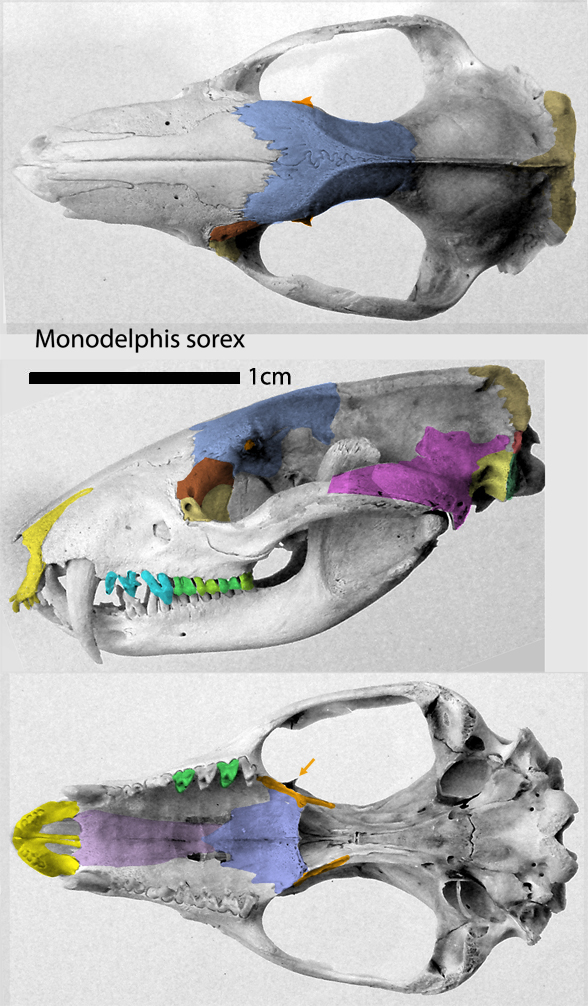
Carvalho, B de A, et al (5 co-authors) 2011. Phylogenetic relationships and phylogeographic patterns in Monodelphis (Didelphimorphia: Didelphidae). Journal of Mammalogy. 92(1): 121-133.
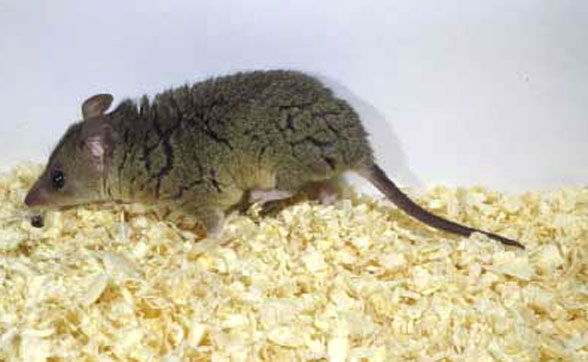
Kraus DB and Fadem BH 1987. Reproduction, development and physiology of the gray short-tailed opossum (Monodelphis domestica). Lab Anim Sci 37(4):478–482.
Miller ER et al (5 co-authors) 2015. Ptolemaia from West Turkana, Kenya. Bulletin of the Peabody Museum of Natural History DOI: 10.3374/014.056.0105
Osborn HF 1908. New fossil mammals from the Fayum Oligocene, Egypt. Bulletin of the American Museum of Natural History 24:265–272.
Simons EL and Bown TM 1995. Ptolemaiida, a new order of Mammalia–with description of the cranium of Ptolemaia grangeri. Proceedings of the National Academy of Sciences USA. 92 (8): 3269–73.
wiki/Ptolemaia
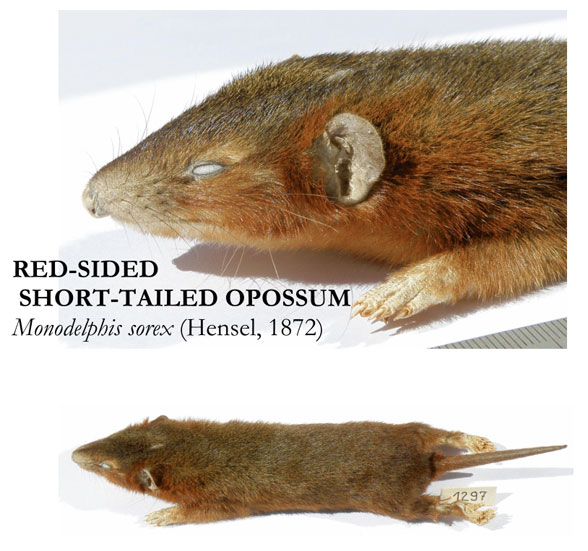
wiki/Monodelphis
|